Friday, 9 November 2012

Shoe and Tell 3

I've dabbled with sculpting and texturing the shoe in Mudbox. I have put it together roughly in order to practice with setting up displacement maps with shaders in Maya. It can be quite tricky. 

It is far from perfect, but I should be fairly pleased that I have got a result at all.


So this has the sculpt in the shoe on the outside.

And, if you have a look at some of the textures, for example, the laces and seam on the side of the shoe, you can see that they need some time put into them. This is due to just testing everything out before I go into high details.

Here you can see some the issues with the displacement map in this ambient occlusion layer - especially at the toes...

The texturing process in Mudbox is quite efficient, especially that you can export them then open them into Photoshop if you wish to tweak them before going into Maya with it.


See, a comp' can make anything look better. Even a rough Photoshop one (yes, specifically by blurring poor textures!)...

Tuesday, 6 November 2012

Basic Outline of Film

The film I want to produce:

A film of industry standard visuals and usage of compositing techniques, as close as possible.
A character-based film.
The environment (CG) should reflect the inner thoughts of the character.
We explore this environment and them, esp. through pure cinema techniques.
Environments of depth and fog, for example, for a cinematic look.
The character is out of place, or confused, and desires insight or validation, for example.
Comedic, but mysterious in tone...
...The character is self-destructive, but it is a thought that they get what they want...

The team so far:

Director/compositor - Fraser Murdoch
Writers - Fraser Murdoch, Mark Grossi, Tom Paxton...
Director of Photography/cinematographer - Michal Zagorski
3D modeller - Lina Ivanova
(Possible) Assistant director - Kyle Wilson
(Possible) Technical advisor - Matt Cameron
Actors - Fraser Murdoch, Alona Kiricenko, Iain McLachlan...

Other roles such as concept art, texturing, lighting, etc, are fully to be taken up by myself, Fraser Murdoch, as it currently stands...

Writing and further brainstorming is underway fully beginning tomorrow with initially Tom and Mark.

References so far (notable examples):

Film noir - visuals and atmosphere
Alfred Hitchcock - pure cinema
Jeff Desom - VFX in live action films
Alex Beh - entertainment style
M.P.C. - cinematic composites
The Mill projects - VFX
Martin Scorsese - use of film history
George Melies - editing trickery
Charlie Chaplin - central character - acting/performance
La Strada - "
'The Trial' - setting and atmosphere
Dundee - setting - derelict mills/factories
Kirkcaldy - "
...

"Pure Cinematics"

Mr Hitchcock describes it best in his own words:


It's the simplest and most effective of techniques.

A technique that I would clearly like to utilise to provoke the reaction in the audience to the character I intend to.

This in theory is a 'subconscious technique', as it is not my primary focus in the project. It's a way to not over-complicate things. I aim for a simple short film.

_____
N.B. Writing is soon underway on the project.

Black (Noir) Film

A heavy influence on the visuals I'd like to produce is the style named film noir.
I have also used this as an influence for my undergraduate film 'My City'.

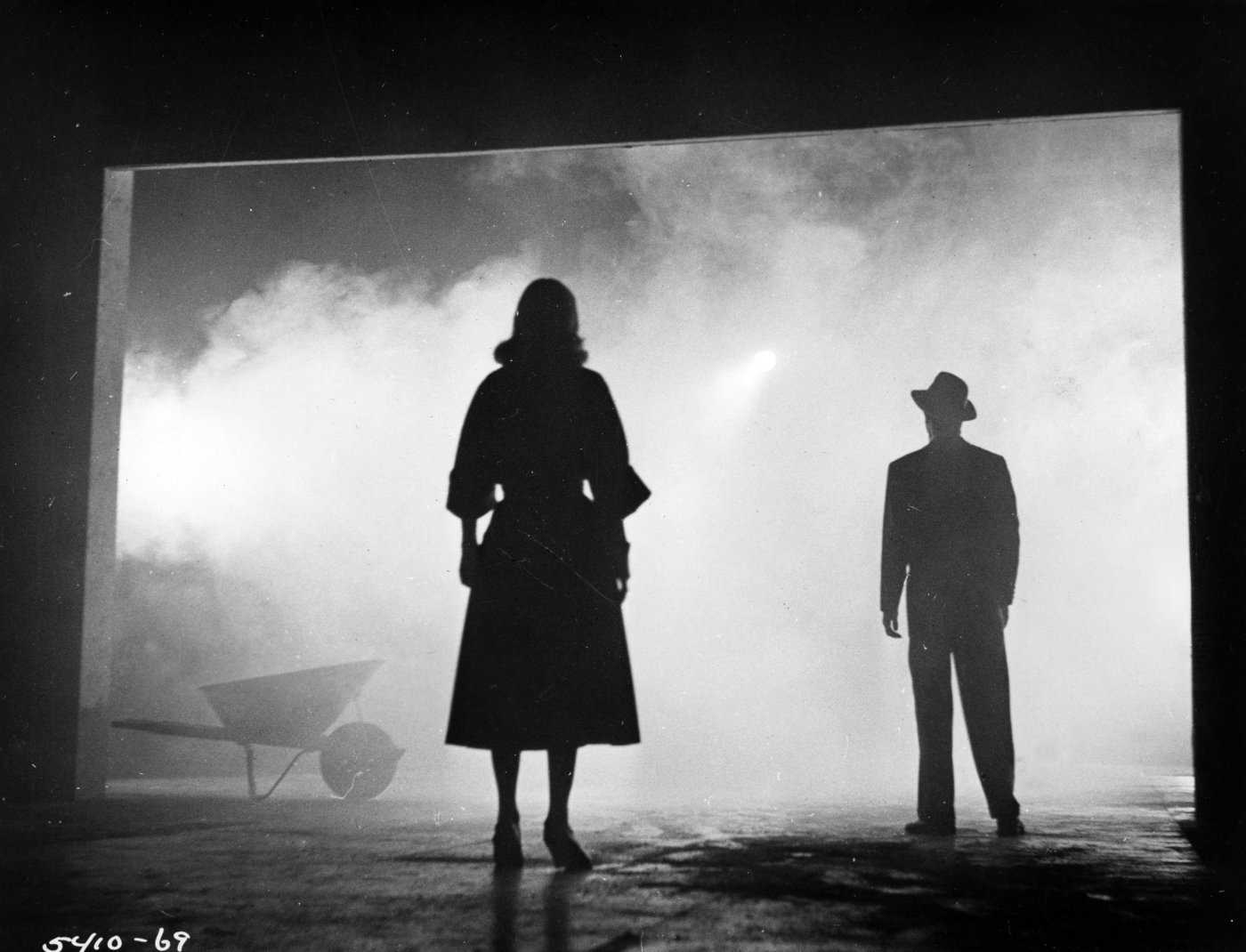
Iconic still from The Big Combo (1955).

If you aren't entirely sure what "film noir" is, it is basically a French term meaning films that are dark/black visually, with rather dark content such as murder. The style was adopted and adapted by French filmmakers, however its origins are from the Golden Age of Hollywood, in the post WWII period. There is evidently a lot of dispare in these films. The term was coined by a french journalist, and the Hollywood directors weren't entirely conscious how historical and cliched their films may become.

Particularly notable aspects in this look is it's high contrast, fog, backlighting and silhouettes, shadows of characters and patterned shadows...

The darkness and mysterious atmospheres, to me, are clearly cinematic and appealing.

Monday, 5 November 2012

NURBs Progress

A few more hours spent on the NURBs project/assignment. 

I reshaped some parts and added a few objects, and wires. It is starting to take shape and get more detailed. After I add all of the objects and wires, I shall then add the curves and shapes between objects which make them look smooth and as they are welded. After this, a little tweaking should be in order...


Thursday, 1 November 2012

Abstract Writing


Assignment for Jeanette's module.

Cinematic Composites


Understanding the history and antecedent work of your industry is imperative for going forward and doing a good job, in my opinion. Therefore understanding film history is important in making motion pictures. I have studied this generally in the past. I have also generalised in animation. I feel this understanding isn’t often the case in the industry. In this image-exploration-based masters course, Animation and Visualisation, I hope to study the images in film over time and produce my own cinematic images. This will be produced by modern techniques, using nowadays technologies, in visual effects. My specialism is compositing, which is the pulling- together of all of the elements of several medias to integrate these cinematic moving pictures.

I plan to interview individuals based in animation, and people who are simply audience members and objective in their views. This will give me a better understanding of opinions on images on screen and even what people simply like to see and appreciate in a film.

I shall also hold peer reviews for the progression of the piece and seek opinions on development work. This can be through networking and blogging.

Research taking place will also be in the form of photographing and scouting cinematic locations, based on research of several feature length and short films which are of the look I hope to achieve. Concept art in the form of digital and oil on canvas is hoped to be achieved to create the look I am aiming for. I will combine these materials in designs for environments for my character. Collaboration will take place here, as well as in writing.

Prior to this, I will develop a character which I will collaborate to develop a simple, visual situation which sets up compositing techniques for me to explore.

I have worked in, and enjoyed, After Effects for composting in the past. I plan to research how to emulate what I can create with this software in Nuke, afterwards learning new techniques, for example, chroma keying.

In the first semester I plan to do simple Nuke composites with a live action character put into a simple generated scene hopefully justifying using software to create the scene by animating it for example, or creating something not purely realistic. Even two tests, one being a 3D camera tracking shot, and the other simply a green screen test.

I plan also to sit with a team of writers for my final project. I will create a character and a vast list if visual reference material. The collaborators will be there for brainstorming, suggesting and bringing other ideas to the table. I can then discuss the settings we envisage with 3D modellers and texture artists . After this, I can discuss lighting and shot layout with the cinematographer and plan to synchronise the live action and computer generated lighting for compositing. Some of this may exceed the dates of semester 1. However, the process is similar to that I will go through for the semester 1 test(s).

The remainder of semester 2 and semester 3 will therefore be creating the environments and compositing everything in computer software to polish the cinematic images.

Work by Alfred Hithcock, Martin Scorsese, Jeff Desom, Alex Beh, George Melies, Charlie Chaplin, film noir, mob film, etc, are influences on my work.

Shoe And Tell 2


Simple 3D modelling is practically done...

Extruding the lace through the holes and around each other was actually fairly easy and simple. I find polygon modelling a lot easier than NURBs. However, I have worked in polygons for a couple of years now.

It is also good to model this shoe, as it is simple. Being simple, by going into detail, you can make something that ultimately looks good.

This is a photograph...