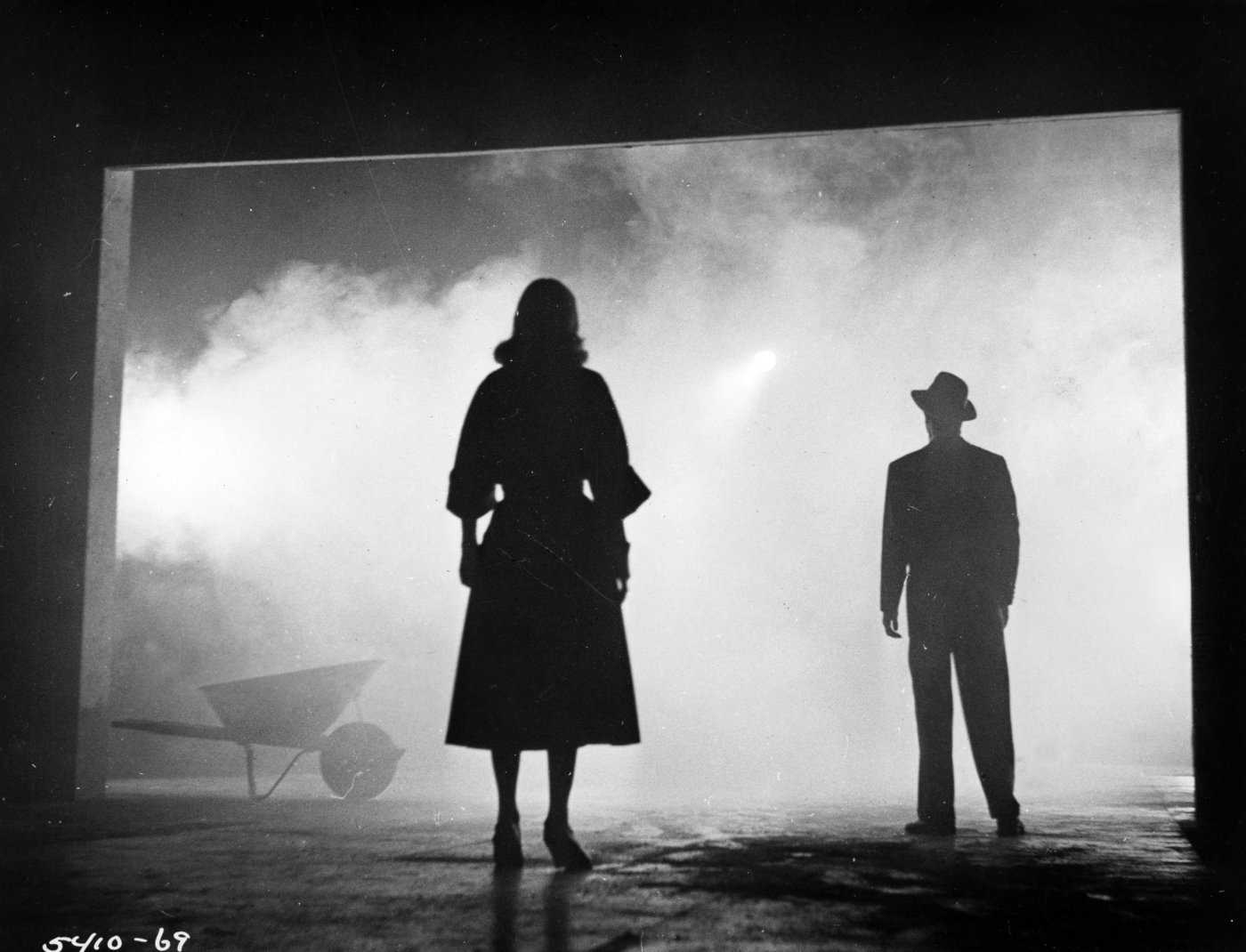
This is a post revolved around some influences, inspirations and antecedent work which get me all excited inside, and that (opening up too much to you?)
First of all, to understand my view point, one must have to look at at my undergraduate piece I finished in May of this year:
This short animated picture was based on a rigorous passion of mine, kept company by particular philosophies - such as a documentary style to display and describe a character from two different POVs in order for the audience to form their own opinion on the protagonist. All of the form of cinematic conventions and storyelling techniques (See Van Sijll, 2005) were explored to display film history knowledge. Very arty, yes. (
more information here.) It was a very
rigorous process, and in hindsight it was great to make a serious movie based on such nonsense.
Despite the majority of 'My City' being created through animation (excepting the shot of the architectural drawings and some smoke and particle elements), I am also based in live action - this area is where my masters study will be based primarily.
The
documentary style of 'My City' was influenced by Kolker (2000)'s writing on Martin Scorsese's work, and then my interpretation of his work after reading up on this. Scorsese uses tracking shots often in his films, often with a voice over involved throughout it. Most importantly however, he tells a story through subjective point of views - the clearest examples being Taxi Driver (See the close-up of Travis Bickle's eyes near the start) and Shutter Island (where if it wasn't told from the protagonist's point of view, the secrets, mysteries and twist in the tale would fail). This is one of many elements necessary to have in mind when telling a cinematic story - POV.
Another imperative touched upon there, is character. Scorsese believes that if a character, or the person, is interesting enough, one doesn't have to get bogged down in technique. In my opinion, the techniques used should explore that character and open them up, through the events and locations/settings/environments. Alfred Hitchcock believed technique was more important than story. Simply because the techniques helps people to react to whatever the content may be.
(I feel it is like telling a joke. You could say something completely shit in a funny way and you will get a laugh. But, if you say everything dead-pan, you could be saying the wittiest things but people think you may be serious and so they ignore it.)
Hitchcock used a technique called pure cinema where a story was explored through the eyes of the character, as the audience are shown events and consistently the character's reaction to these developments. I believe people follow a film better through these techniques such as point of view, simply, because people like, or are interesting in, people (maybe not if you're autistic - sorry - but we, in general, interact and have evolved this way). Audiences will respond better to this and likely remember the film well after the screening (unlike, in my opinion, if they just see some fancy and random visual effects for 2 hours. I don't care if it had surround-sound as well).
Based on this, another point worth noting is that Alfred Hitchcock used cutting/editing techniques/storyboarding to cut from gore and violence (despite the subject of his films consistently being of gruesome content). He believed, and I agree, that it is stronger to leave an impression on the audience member's imagination, and let them do some of the thinking themselves. Filmmaking seems to have an incorrect expectancy to create visuals for people who need to escape and see things they couldn't think of. Come on, filmmakers aren't the only ones with imaginations, and displaying overdone visuals is not interacting with the artwork, it is closer to alienation.
A industry-wide philosophy on my project is based on the idea of the current visual effects industry and the way the techniques are used in film. When regarding film history and the technological developments throughout it, I want to take an understanding of how the filmmaking industry developed to these developments in order to put into perspective present time.
Where does the present-day filmmaking industry fit into the grand-scheme and context of film history? What has come before and what is yet to come?
Are visual effects over-writing tried-and-tested filmmaking conventions, or adding to them?
Therefore, what use is this current technology when making well-researched films based on those films made, and techniques developed, in the past?
This might seem like a lot of questions, but they really are just the same question worded different ways...
A problem I personally aim to overcome in the masters, succeeding my undergraduate project, is to keep the premise simpler. I also aim to collaborate on writing. When it comes to the content of the story, the objectives are to interview people and hear their stories and anecdotes, then fictionalise them filmically and for good use of visual effects if possible, but also to have a team of writers to have fun in order to build and entertaining piece (I have a few friends from undergraduate in mind for this).
When it comes to clear entertainment, influences are as follows:
Charlie Chaplin's silent films. I love the clear and theatrical performance:
George Melies' jump cuts and multiple exposures. A simple editing technique explored by the early filmmaking pioneer:
An example of me practicing this very quickly (not based on Melies' use, however):
The films I will create this academic year should be very short, simple, entertaining, cinematic in terms of visuals and storytelling techniques and conventions (imperatively), as well as exploring live action techniques for a grounding to build on afterwards. I haven't, to this point, explored in many areas of live-action, notably getting the involvement of make-up and costume artists. If this were possible at any scale, it would be beneficial I believe to my plan going forward. These type of things are, however, not set in stone - they're not even set in eroding wood. Collaboration, like last year, will likely be very broad. I do know people, you know, know. No? Yes.
Based on these influences, and the fact I know a few pianists as well, along with understanding how much bloody time sound design can take up especially when writing a new song with many instruments for every film, I think it would be cool to simplify the music to solely piano... I have always wanted to use an orchestra in my films, and have tried, but this can possibly wait until I have mastered some other things...
Recent work by filmmakers worldwide worth noting in this particular post (to mix generations up a bit) are Alex Beh's short films and some others.
Sugar by Beh
https://vimeo.com/9863602
The Laundry by Beh
https://vimeo.com/9606406
X on a map by Jeff Desom
https://vimeo.com/50779179
I like the techniques in Beh's film as well as the entertainment values, as well as dialogue quality.
And you can't forget The Office (UK) for some great realism and comedy:
And, here's some clear evidence that I am influenced by this show:
Yes, I plan to act in my films as well. Obviously. And I have a few friends in mind. There will be less dialogue, but in regard to writing it, it will like this. Written to sound real, and have a little bit of an ad-libbed feel as well likely. No plastic lines my plank-like actors. Real people. Like in Monster (2010). Very minimal dialogue, though - this a defensive mechanism. But, I will use people I trust to do dialogue, funny looking ones to move around theatrically, or people who look good who are just to stand on the spot, well lit. Okay, I'm getting facetious now, and there is no way I can tell this is likely at this stage.
An example of visual effects techniques such as compositing, 3D computer modelling and live-action plates:
My project will balance these things but ultimately the specialty and focus is creating well-polished images through the control of many medias to integrate as a whole in the compositing stages (in order to explore cinematic storytelling with modern techniques and pipelines). After all, filmmaking is storytelling though images.
I personally can't wait for the writing and testing stages...
This has been a long post, but also very vague, so wait around for some more detail in to influences and aspirations. I hope it has given you some background to the forthcoming project.
Fraser.