(click to go to Google Docs)

This blog stands to show Fraser Murdoch's progression from undergraduate animation to postgraduate graduation... The blog is available to the public, but is also used for assessment purposes..
Friday, 30 November 2012

Research Skills and Methods | Academic Poster
This poster is currently in line for printing. The poster design's function is to put across clearly the context of our proposed research for masters, and display what we have already gathered and learned in a concise and visually clear manner, basically.
Here is the final poster:

I produced it using Photoshop, and when printed A1 size it might therefore be a little pixelated, due to everything, bar the text, not being vectors. My computer began to slow up a bit over the last week with renders going and files using up memory (probably), so there may be errors within this poster which I didn't have the patience to fix. Hopefully it is all good for presenting officially next week.
I have found over the past while the proposed research I intend has evolved and has clarity, and I hope the poster hints to this, although I will also support this poster verbally for assessment.
Test 1 Video
I have produced a test, one that I have kept you updated with, i order to experiment with the proposed techniques in my masters. The compositing techniques I have tried, have been: filming on green screen, chroma keying with Keylight, integrating a live action character into a CG environment and using some nodes in Nuke.
Here is the outcome with no sound:
There still might be another version uploaded in the future with sound.
I find the experiment has turned out fairly successfully. Next time I might try to find better ways to key a blurred element and composite some more live action elements into the environment/scene.
I hope to produce more tests next semester for similar reasons - to practice in compositing techniques proposed for my final output, as well as create composites edited as simple and full short film pieces.
Thursday, 29 November 2012
Nuke Light Wrap Test
I had been creating light wraps in After Effects, using the alpha of the key by converting it to black and white (foreground character, and transparent background), and simple-choking it, expanding it to create a stroke and then blurring it out and masking the background out again to create a sharp edge (it's simple, really).
But for this scene, the large, selling, multiple exposure, I felt it very necessary to composite the background and foreground (which I composited together in After Effects) in Nuke and applying the light wrap there in order for the character to appear to be in the scene that bit more...
We had used light wraps in Hugo Guerra's master class in the last academic year, when he walked us through compositing most of a scene from The Mill's Audi Hummingbird advert, so I knew how to set one up.

 Okay, it might be subtle (you can flick between the two images), but important I feel.
Also, I tried to get a wrap around the character a little more, even in the dark areas. In After Effects, with the amount of composites and re-scaling, it has taken a while. This might be achieved for the final render, though...

But for this scene, the large, selling, multiple exposure, I felt it very necessary to composite the background and foreground (which I composited together in After Effects) in Nuke and applying the light wrap there in order for the character to appear to be in the scene that bit more...
We had used light wraps in Hugo Guerra's master class in the last academic year, when he walked us through compositing most of a scene from The Mill's Audi Hummingbird advert, so I knew how to set one up.
This is example of the scene before the light wrap being applied in Nuke:

And, this is the result after the effect being applied:

Also, I tried to get a wrap around the character a little more, even in the dark areas. In After Effects, with the amount of composites and re-scaling, it has taken a while. This might be achieved for the final render, though...
This is a screen shot of Nuke to show you how I set up:

Pretty simple, but effective.
The light wrap node by itself:

The light wrap node by itself:

Shoe And Tell 5 - "Get Your Shoe Off of the Table!"


I have practically composited the shoe model, textured, into the required scene.
It didn't take too long at all, just say an hour, to composite (included copying files and all that usual stuff.) But, I hadn't really practiced in Nuke too much by that point, so it was a way to do something fairly basic compositing-wise and try out a few things I had seen done or read about and find those nodes to create the effect I desired, such as: GridWarp, ColorCorrection, LensDistortion, Grade, Blur, etc, etc.
Here is the written/rendered image:

I think that the shoe could particularly, an initially, do with some pixelation/compression to it to match the video, as well as some Image Based Lighting with a HDRI (although it was not provided).
I took a screen shot of the node graph to give you an idea of what the image consists of, and to review it.
Here it is:

I look to the future, and further along the masters project and program, where more complicated and comprehensive use of Nuke will be utilised by myself...
Some experiments might be sooner than you think...
Wednesday, 28 November 2012
NURBs Model - Final + Video
Here is the NURBs model with all of the parts created:

I feel there is a lot of room for more detail, specifically in areas such as the lights and screws. However, I am happy with the overall look from this camera view and the new modelling processes in which I have learned in the time which I have had.
Here is a panning camera view of the model:
Tuesday, 27 November 2012
Concept Sketches - Main Project
I have sketched up some of the concept thumbnails a little bigger to illustrate the ideas behind the shots I posted up last week a little clearer.
Here are the pages at the moment:

The notes are on the sketches here, as well as the post from last week, to give you an idea of what we hope to achieve. Time will also develop the techniques we will employ, even though roughly we have an idea at this stage.
It is a piece totally based on technique - even when writing, it is all about character and pure cinema. But, the main focus for me is storytelling through compositing techniques - creating cinema-based images to tell this interesting and fairly simple story.
I may draw these sketches up in Photoshop to a more sophisticated standard this week, or some time after that/after assessment (as I believe it gives one an idea of the progress).
Development will continue for some months now, along with test shoots and effects, so keep staring at your computer screens (without changing this tab...)
A Pair of... Shoes. Shoe and Tell 4

These shoes are soon to be composited into a live action scene/onto a compressed image from a video of a room using Nuke... This should be good practice for the final project.
Example Shot From Test
Here is the multiple flash going off within a scene in the test film I have directed for this semester:

The light wrap is still to be done in Nuke...
This is the After Effects flowchart for this particular shot:

The test video is good practice working with live action to CG integration.
I have tried to match everything with the environment at the shoot, and now adjusting everything in the grade and addition of smoke and CG elements such as fog, and create light wraps (in other shots) in AE (through luminances, simple chokers, and blurs), etc...
___
Final polygon composite, NURBs model and video, academic poster, concept art and an animatic for 'The Escapist' coming soon...
Saturday, 24 November 2012
Test Composites Progress
Here are some examples of composites for one of the shots in the test:


I have composited this in After Effects, but I aim to try out some keying and some nodes within Nuke, to find out more about that program. Unfortunately, this composite does not have any light wrap in it, so using the light wrap node within Nuke might be worthwhile.
In regards to the shoot, I feel we haven't done to well with the layout of the shot. This could have been avoided by more planning, and less improvisation. Let's see how the final video looks... I'll keep you updated.
Friday, 23 November 2012
Project With Mhairi Towler at VivoMotion
I have been drafted in as a compositor and to help with rendering for a project for Vivomotion, a company based in aiding science teaching visually. For a better definition, visit their website by clicking on this sentence.
This should add to my portfolio, and it is an exciting new company.
We will composite and polish this video using After Effects.
This should add to my portfolio, and it is an exciting new company.
We will composite and polish this video using After Effects.
Main Film/Project | Action Details and Team Update
I have blocked out my initial ideas of how I feel the story should unfold, in actions, as well as some shot ideas. I have spoken about this with Michal Zagorski and he has added a few more ideas. He will add more, and we will both meet with Kyle Wilson over the coming weeks and months and really develop it further from a technically implementing it view (even with other individuals who will be involved in supporting the art direction and continuity aspects, or costume and make-up, for example).
Next semester we will run a few trial tests for the shots and effects and get the final shoot wrapped nearer the end of that semester. I will also implement research into my chosen areas of study for this film.
Action/ rough shot ideas:
- Close-up - Protagonist talking to someone (his brother) who is not seen
- Jump cut. Wide shot - Protag standing alone on the street, talking directed at no one. Isolated
- He seems to believe the person has run off, unbeknown to the audience
- He runs through a doorway from the street
- Appears into, and looks around daunted, a large fairly undefinable interior (a mixture of settings - home, office, station/public place, hospital)
- He looks to the side - at a corner - and then goes around that corner, walking with direction and curiosity
- Extreme long shot - POV - He sees someone/the person in the distance, from behind - that person runs/walks around a corner casting a shadow behind them (we do not see the side of their body - it is cast by a wall, pillar or other structure)
- He shouts "Simon!" … " "
- He follows them, then we see a long corridor with a door disconcertingly at the end, very small. Focus is pushed and pulled
- He makes his way to the door in a direct fashion, seeing home furnishings along the way - which weren't visible in the previous long shot
- POV - he opens the door - It reveals a large (or small. Undecided) interior full of office furnishings such as desks and tables and lamps, and one man at a desk working (only lamp which is switched on is shining on his desk), with a fairly blank expression on his face (Wide to medium shot as character approaches them). An older man. There is a door seen at the end of this room. (the room resembles both an office and a home)
- The protagonist asks if this man has seen his brother, as he is looking for him, and he believes he must have gone this way
- The man replies "You have to look after each other" and confuses the protagonist
- He makes his way passed the old man and towards the door at the end of the room, not even thinking about turning back around
- Extreme long shot - chasing a shadow from the right side of the screen/interior to the left (the room resembles a hospital or public place)
- He makes his way through a corridor of doors of multiple colours. One door opens then there is another one, then they all open themselves/automatically to reveal endless amounts of doors
- He makes his way through all of the doors flying around and at him, and eventually after building pace, he finds his way out of the door in which he entered the interior through, leaving him on the street he started at
- Close-up - He is thinking and still panicking slightly, he looks to the side, and relaxes and shuffles a little, maybe tickling his nose
- Medium-Wide shot - The camera cuts out again. This time he is standing with his conjoined twin brother who is chatting up and flirting with a girl on the street.
___
The team (initial hopes):
Producer - Fraser Murdoch
Directing - Fraser Murdoch, Kyle Wilson
Concept - Mark Grossi, Tom Paxton
Writing/storyboarding - Fraser Murdoch, Michal Zagorski, Kyle Wilson
Cinematography - Michal Zagorski
Make-up/costume - Jill Sime, Jillian Crabbe
Sound/music - Arek Draiurzynski
Technical advisor/technician - Matt Cameron
Art direction/continuity - ___
CG Modeling - Lina Ivanova
Compositing - Fraser Murdoch
Research (MSc) - Fraser Murdoch
Actors - Joseph Hood, (and an actress, maybe Alona Kiricenko)
___
N.B. JUST TO MAKE THIS VERY CLEAR, I AM MERELY A CO-WRITER AND CO-DIRECTOR, - SO I AM EVEN SHARING THESE ROLES. MY MAIN ROLE AND FOCUS IS COMPOSITING, AND THE PROJECT REVOLVES AROUND COMPOSITING TECHNIQUES TO TELL THE STORY.
Thursday, 22 November 2012
Graphic Design Project
A few weeks back I helped a friend shoot a presentation video for level 4 Graphic Design.
Here it is:
Green Screen Test - Edit Progress
I have edited each shot for the green screen test shot on Wednesday down and put the sequence together.
Here is the progress:


Tuesday Green Screen Time lapse
I helped out course mate Thomas Hogben on his shoot at the green screen at DJCAD on Tuesday, so it has been a very green week... kind of...
Here is a time lapse:
'The Escapist' - Rough Storyboard Thumbnails

This is the basic idea for the extreme-extreme long shot surreal sequence for 'The Escapist' music video
Live action plate snapshot sample:

Not necessarily the exact take which is in the final edit
'The Escapist' - Music Video - Sequence Synopsis
This is the notes for the details for the surreal sequence I am leading for the music video for the song 'The Escapist' with Michal Zagorski.

It is based in VFX and compositing.

Concept image. Going for more of a 'cartoony' bat/style.
___________
The Escapist
Surreal sequence details
IN VIDEO WE GET TO:
Extreme long shot - car driving at night
Long shot - car stops, lights start to flow out of headlights slightly into sky
Extreme Long shot - lights expanding into sky
Long shot - Kyle gets out of car/opens door, and lights sharply snap back into headlights
Side of door shot - Kyle getting out of car and going to the boot
______
After boot shot of bats' eyes and rustling
POV of bats looking at Kyle - Bats fly/swarm out of boot towards Kyle covering him completely but sometimes revealing his eyes (particle system as well as 2-and-a-half-D bats of varying scales)
Bat size width of Kyle's face/half size of face
Millions of bats
Long shot - Kyle at boot, bats (lit by both headlights only) fly/swarm towards sky past both headlights to either side of the screen.
Extreme-extreme long shot - They change direction like swarms of birds in sky
Bats aim to cover all of sky
They then hang in sky upside-down, shuffling
They sync to black
We see their cartoony eyes blinking, then glowing like stars
A red moon comes in
This looks very beautiful
After this - we see the ground as an x-ray - roots, rocks and stones, moles and giant ants building things, skeletons
Like death and ugliness
Bats then fly off dragging the sun behind
Sky and ground fades out to reveal the original shot.
THEN REST OF VIDEO...
______
I am now storyboarding this sequence.
Working with Thomas Hogben on this shot, and possibly others. This continues onto the start of next year/semester 2. Particle tests have already been created, and look promising. A pre-vis is planned to be created by the beginning of this December.
Green Screen Shoot And Chroma Keying Tests

Example of simple chroma keying test in After Effects for 'multiple exposure' shot.
Myself and Michal Zagorski led a shoot at the green screen studio with the beautiful Alona Kiricenko doing the performing.
We filmed from 3pm to 8pm and were quite efficient at following my storyboard and keeping everything simple and well executed (in our opinions...)
I have since executed some simple chroma keying using Keylight within After Effects. I also hope to do this in Nuke (with Keylight, and IBK colour nodes, etc.) and composite it with more style. I find that After Effects creates naturally quite an artificial look, and there aren't many, many options available to rectify this, quite like it seems Nuke, complicatedly, can.

A simple AE key and composite.

The original plate shot on Wednesday.
_____

Another, less accurate example.
This test should allow myself and Michal to know better how to go about a green screen shoot, even though we were very textbook in how we went about it and knew/were confident in how to do it beforehand. But, also it should allow us to see how more creative one can be with it, after practicing the basics fairly smoothly.
Tuesday, 20 November 2012
Very Simple Composite - Update
For updating purposes....


This is a very simple comp with only a few passes and layers, without much atmosphere or anything. I have played with the camera settings and UVs, and would like to play with the lighting, as it is currently set at default physical sun and sky with bounce light/final gathering.
I tried to do achieve this look using Nuke, but this is achieved in After Effects. It is just much quicker for me to create in AE. Whilst attempting to create it in Nuke I was trialing a lot of the interface and getting to know nodes (zblur, shuffle, grade, merge, roto) and layers (RGB, luminance), so it was a productive time in a sense, but the output took so much more time due to my inexperience. This will progress and I will get a lot better at Nuke - it is so much more complicated and therefore more can be created with it.
I can remember when I started up After Effects. I found it quite mind boggling as well. As is the case with any new software which we in our field have to constantly adapt to. But, I am now incredibly comfortable with After Effects. I'm not going to do what Andrew Kramer has seemed to do and be so very faithful to AE and develop it. I am converting to Nuke for compositing this year. And, I will still use AE for particular areas it is best, easier, or more fun for, likely...
I am shooting a live action green screen test tomorrow. I will chroma key this, and if possible composite the live action character into this environment, gathering camera and lighting details and emulating that into this CG environment. I have been given some detailed advice from Matt Cameron (director and VFX artist), and researched what is needed for the composite, etc. We will try and recreate the current lighting setup you can see in the images, as close as possible.


Please ignore error
I tried to do achieve this look using Nuke, but this is achieved in After Effects. It is just much quicker for me to create in AE. Whilst attempting to create it in Nuke I was trialing a lot of the interface and getting to know nodes (zblur, shuffle, grade, merge, roto) and layers (RGB, luminance), so it was a productive time in a sense, but the output took so much more time due to my inexperience. This will progress and I will get a lot better at Nuke - it is so much more complicated and therefore more can be created with it.
I can remember when I started up After Effects. I found it quite mind boggling as well. As is the case with any new software which we in our field have to constantly adapt to. But, I am now incredibly comfortable with After Effects. I'm not going to do what Andrew Kramer has seemed to do and be so very faithful to AE and develop it. I am converting to Nuke for compositing this year. And, I will still use AE for particular areas it is best, easier, or more fun for, likely...
I am shooting a live action green screen test tomorrow. I will chroma key this, and if possible composite the live action character into this environment, gathering camera and lighting details and emulating that into this CG environment. I have been given some detailed advice from Matt Cameron (director and VFX artist), and researched what is needed for the composite, etc. We will try and recreate the current lighting setup you can see in the images, as close as possible.
Sunday, 18 November 2012
Movie Post 1
I was recommended to watch director Michel Gondry's Eternal Sunshine of the Spotless Mind (2004) (written by Charlie Kauffman) for research into the dreamlike feeling I am aspiring to achieve well with this project/main film.
On an initial watch, I perceived the techniques used to be interesting and imaginative, for example, the transitioning sets within a single shot, similar to the style of film director Joe Wright's adaption of Anna Karenina (2012).
The settings which were not exactly realistic, I felt, were both like the set of Stanley Kubrick's The Shining (1980) and the effects shown in Christopher Nolan's Inception (2010).
Imperatively, the cinematic and visual effects techniques used provide a psychological puzzle in this case as well as an escape for their audiences.
(I may elaborate on this further...)
On an initial watch, I perceived the techniques used to be interesting and imaginative, for example, the transitioning sets within a single shot, similar to the style of film director Joe Wright's adaption of Anna Karenina (2012).
The settings which were not exactly realistic, I felt, were both like the set of Stanley Kubrick's The Shining (1980) and the effects shown in Christopher Nolan's Inception (2010).
Imperatively, the cinematic and visual effects techniques used provide a psychological puzzle in this case as well as an escape for their audiences.
(I may elaborate on this further...)
Saturday, 17 November 2012
Warehouse For Test Progress

The lighting will be a little different, based on film noir, and the textures shall be touched up in terms of resolution.
I will do a multi-pass render and create an atmosphere in the place in the composite. Then, I might composite the beautiful Alona Kiricenko into the the environment after the live action (green screen) shoot next Wednesday with Michal Zagorski (if the chroma keying goes well enough...), and follow the storyboard presented in a previous post.
Thursday, 15 November 2012
Notes on Siamese Twins
As recommended by Mark Grossi...
Films to watch for reference:
- Sisters (Brian De Palma)
- Dead Ringers (David Cronenberg)
- Basket Case (Frank Hennenlotter)
Research into:
- Chang and Eng Bunker (first noted case of conjoined twins)
___
Note: The film should be haunting and alluring through the character's search in their dreamlike state, and I imagine it would have at least one surreal exchange with an individual (just visualising). A long shot of the brother from a distance, facing away from camera, in an expansive setting is another detail which comes to mind from the offset.
The quirky twist in which it ends on should also be heartfelt and portray as accurate as possible a portrayal of siamese twins' relationship with each other.
It is led by a fear of loss, subtly shown as a desire to find someone.
The rest of the piece is all about these composite shots I want to produce with the storyline.
My studies are therefore focussed on siamese twins to an extent, as well as more predominantly compositing techniques and further cinematic/film understandings.
Wednesday, 14 November 2012
Character/Scenario Development 2
As for the final piece, I think I am settled on a premise to explore and develop.
Last time, I posted Mark Grossi's concepts. I was favouring the idea of a man searching for his brother through a strange environment, later to reveal that he has been hallucinating and he is still in fact conjoined to his siamese twin brother.
Mark has pitched, since, another concept. Here it is:
A man is struggling through the city streets - cold, tired, hungry and jobless. As he fumbled through the crowds, he makes it into the job centre to find a job. He leaves (successfully/unsuccessfully) but something happens to him that sends him spinning into the throes of death. An angry voice is heard followed by a loud bang - we zoom out of the incident, through a tv to see an unemployed guy in a messy, unkept flat furious that his character on the game died.
Tom Paxton has also provided his ideas for the film:
1.
A visitor to an unknown city, wandering lost in the streets. He is a kind and well liked man, but he is also proud, and would never consider stopping to ask for directions despite the fact that with every step he takes he becomes more and more lost. As he becomes anxious and frustrated with his situation, the very city around him seems to loom above him, becoming more alien and unwelcoming then ever. He has a map, but it seems not to correspond to the unfriendly land around him, and even as he looks at it the coloured lines and text seem to squirm and rearrange themselves in front of him.Slightly unsure of the ending. Could eventually find his way by sheer fluke.
and reassure himself that he knew the way all along and was never lost.*
Or possibly have an ending where something bad happens to him if you wanted to make it darker.
2.
A guy in a hospital, the nurse is telling him that it's for something serious, though he is convinced there is nothing wrong with him and that the hospital staff are imposters keeping him for shadier purposes. Once the nurse is gone he attempts to leave, but the building is disorientating and unnatural in it's layout and architecture, like something out of a dream. You're then left with the chance to decide whether he is just delusional from sickness and drugs, or actually correct in his paranoia about the ulterior motives of the staff. Or you could just leave it open to interpretation.
___
The concepts here are along the same lines as we discussed - a setting exposing the character, and the feeling of being lost or on a quest.
I am now convinced I want to go ahead and use the concept of the siamese twins for my final piece. Hopefully I'll be able to explore this as far as possible to complete the piece whilst still ticking the academic boxes. I feel it does tick the boxes for what I want to explore this year - visually, technically, and I will bring my studies of film into this very easily, I feel...
I have spoken to cinematographer Michal Zagorski about this and we are to have a few meetings again later, and talk to some other collaborators of ours.
Myself, Mark and Tom will be in discussion through the development of the script.
___
Hopefully a first draft script will be written up soon/for the beginning of December. (It will be developed more thoroughly briefly after this...)
Semester 1 Test - Storyboard
I have booked the green screen and photography studio for next week, and arranged to shoot a test there with cinematographer Michal Zagorski, with the performance by Alona Kiricenko. We have also went into details as to how we shall set everything up, and suggestions about character and wardrobe.
It is designed to combine practice in Nuke and other programs, green screening and compositing and using the environment modelling and composites I am collaborating with Lina Ivanova on.
It is also important that it has influence from cinema's past and has particular looks, such as film noir, pure cinematics... for my studies.
If it were to be completed beyond merely tests, this is the very simple storyline the shots will produce:


These are the first draft storyboard pages.
I also put together a video to show things in a LITTLE more detail. This might do with being a little better, but the information is currently there.
This is a first draft as well:
Thoughts?...
Monday, 12 November 2012
Character/Scenario Development 1
I had a meeting last week with Mark Grossi and Tom Paxton, who graduated from Animation and Electronic Media (BA Hons) this summer with me.
We went through the project and communicated the main objectives in the piece I have discussed briefly in other posts.
Mark has provided his first few starter concepts.
Here they are:-
- A man has constant nightmares of searching for his brother through large, pertinacious rooms and constructs. His brother is always within sight but he can never reach him. Shattered and despondent, he's plagued by these scenarios crafted by his subconcious. He awakes in a sweat and breathing heavily, but is soon calmed to find his conjoined brother is still there next to him.
***
- A happy go lucky kind of guy. He takes to the streets with a spring in his step and seems to be amazed and enchanted by his surroundings (what he 'sees' can be embellished or fabricated: everything is breathtaking). Whenever a person walks past with a dog a smile flashes up on his face as he immediately squats down and talks to the dog as if it were human (completely ignoring the dog walker). This happens a few times along with other incidents until something triggers the reality that he is in fact a dog being walked down a dreary street.
***
And here is an optional third:-
- A bitter and resentful character who left his wife after their kid died at an early age. He lives a life of not only regret, but denial; refusing to face the realities of his actions. He didn't leave his wife because he was inherently nasty, but because he was weak and every passing day her face would remind him of their daughter.
He knows deep down that he has to confront this fear for the sake of not only his mental state but, most importantly, his wife and daughter.
***
Let me know what you think is your favourite and any ideas on them if you'd like.
Initially what I like about these is the simple premise which I can develop around visuals and techniques and influences, etc, which also have a nice twist in the (dog's) tale. This is the simplicity I'm looking for, whilst being a rounded concept.
The second character is a funny one. It seems original, but I'm also thinking how I will reveal it is in fact a dog. But again, it is visual through a subjective viewpoint, which is what we are looking to create.
The first one is in the lead for me, at the moment, because the character has a clear desire which will drive the short piece - and is a simple gag and interesting to play with...
It will be good to develop both, they are interesting and I am very keen to make these. But, I am waiting out for other ideas, and see if they change a little as well...
The first one is in the lead for me, at the moment, because the character has a clear desire which will drive the short piece - and is a simple gag and interesting to play with...
It will be good to develop both, they are interesting and I am very keen to make these. But, I am waiting out for other ideas, and see if they change a little as well...
With these ideas collecting, I am getting more excited about exploring these visuals and techniques.
More ideas to come from Mark Grossi's creative brain...
Tom Paxton is also working on his starter ideas at the moment. A string of posts imminent.
Friday, 9 November 2012
Environment For Test So Far
I am doing a test this semester for compositing an environment in Nuke.
For this, I am working with classmate Lina Ivanova.


So, here is a render with physical sun and sky lighting.
Once a few more objects are modeled and placed into the environment, as well as some simple textures are applied, I will set up the camera, lighting, render layers and then add elements, other styles and correct everything and generally composite in Nuke (I might even add a live action character if all goes exceptionally well)...
NURBs Progress
(Kind of)

I have simply added a few basic objects to it since the last update. If it was real, it would now function as it is intended (yes, if it was real) as I have now modeled the lights. They may need a little more attention, though ..I'll make sure I don't keep them on, as this is bad for your eyes.

I wanted to see it a little differently, so I did a very basic IBL, assigned a mental ray shader (looks like a blinking plane!) and composited it in Photoshop.
Shoe and Tell 3
I've dabbled with sculpting and texturing the shoe in Mudbox. I have put it together roughly in order to practice with setting up displacement maps with shaders in Maya. It can be quite tricky.
It is far from perfect, but I should be fairly pleased that I have got a result at all.

So this has the sculpt in the shoe on the outside.
And, if you have a look at some of the textures, for example, the laces and seam on the side of the shoe, you can see that they need some time put into them. This is due to just testing everything out before I go into high details.

Here you can see some the issues with the displacement map in this ambient occlusion layer - especially at the toes...
The texturing process in Mudbox is quite efficient, especially that you can export them then open them into Photoshop if you wish to tweak them before going into Maya with it.

See, a comp' can make anything look better. Even a rough Photoshop one (yes, specifically by blurring poor textures!)...
Tuesday, 6 November 2012
Basic Outline of Film
The film I want to produce:
A film of industry standard visuals and usage of compositing techniques, as close as possible.
A character-based film.
The environment (CG) should reflect the inner thoughts of the character.
We explore this environment and them, esp. through pure cinema techniques.
Environments of depth and fog, for example, for a cinematic look.
The character is out of place, or confused, and desires insight or validation, for example.
Comedic, but mysterious in tone...
...The character is self-destructive, but it is a thought that they get what they want...
The team so far:
Director/compositor - Fraser Murdoch
Writers - Fraser Murdoch, Mark Grossi, Tom Paxton...
Director of Photography/cinematographer - Michal Zagorski
3D modeller - Lina Ivanova
(Possible) Assistant director - Kyle Wilson
(Possible) Technical advisor - Matt Cameron
Actors - Fraser Murdoch, Alona Kiricenko, Iain McLachlan...
Other roles such as concept art, texturing, lighting, etc, are fully to be taken up by myself, Fraser Murdoch, as it currently stands...
Writing and further brainstorming is underway fully beginning tomorrow with initially Tom and Mark.
References so far (notable examples):
Film noir - visuals and atmosphere
Alfred Hitchcock - pure cinema
Jeff Desom - VFX in live action films
Alex Beh - entertainment style
M.P.C. - cinematic composites
The Mill projects - VFX
Martin Scorsese - use of film history
George Melies - editing trickery
Charlie Chaplin - central character - acting/performance
La Strada - "
'The Trial' - setting and atmosphere
Dundee - setting - derelict mills/factories
Kirkcaldy - "
...
"Pure Cinematics"
Mr Hitchcock describes it best in his own words:
It's the simplest and most effective of techniques.
A technique that I would clearly like to utilise to provoke the reaction in the audience to the character I intend to.
This in theory is a 'subconscious technique', as it is not my primary focus in the project. It's a way to not over-complicate things. I aim for a simple short film.
_____
N.B. Writing is soon underway on the project.
This in theory is a 'subconscious technique', as it is not my primary focus in the project. It's a way to not over-complicate things. I aim for a simple short film.
_____
N.B. Writing is soon underway on the project.
Black (Noir) Film
A heavy influence on the visuals I'd like to produce is the style named film noir.
I have also used this as an influence for my undergraduate film 'My City'.
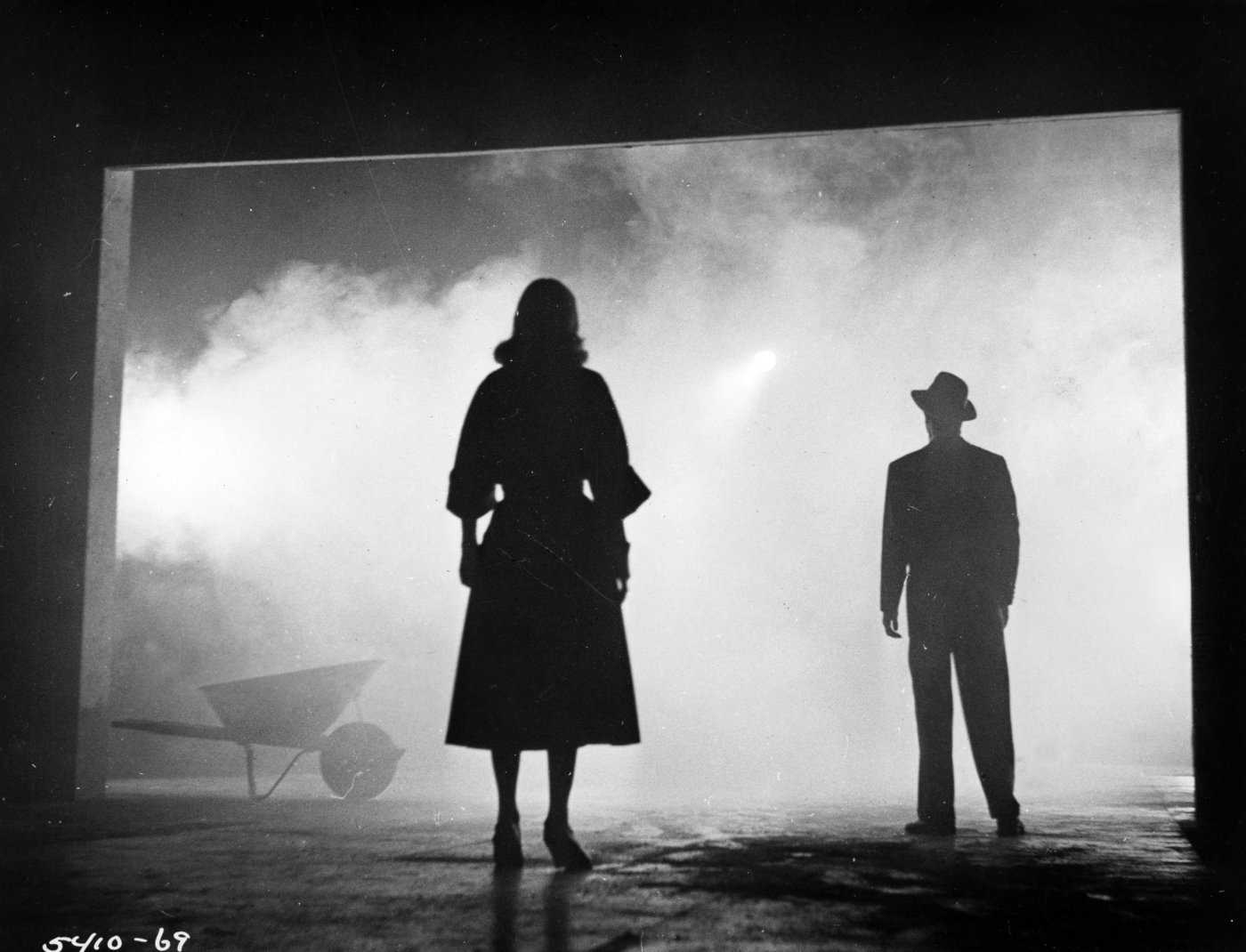
Iconic still from The Big Combo (1955).
If you aren't entirely sure what "film noir" is, it is basically a French term meaning films that are dark/black visually, with rather dark content such as murder. The style was adopted and adapted by French filmmakers, however its origins are from the Golden Age of Hollywood, in the post WWII period. There is evidently a lot of dispare in these films. The term was coined by a french journalist, and the Hollywood directors weren't entirely conscious how historical and cliched their films may become.
Particularly notable aspects in this look is it's high contrast, fog, backlighting and silhouettes, shadows of characters and patterned shadows...
The darkness and mysterious atmospheres, to me, are clearly cinematic and appealing.
Monday, 5 November 2012
NURBs Progress
A few more hours spent on the NURBs project/assignment.
I reshaped some parts and added a few objects, and wires. It is starting to take shape and get more detailed. After I add all of the objects and wires, I shall then add the curves and shapes between objects which make them look smooth and as they are welded. After this, a little tweaking should be in order...

Thursday, 1 November 2012
Abstract Writing
Assignment for Jeanette's module.
Cinematic Composites
Understanding the history and antecedent work of your industry is imperative for going forward and doing a
good job, in my opinion. Therefore understanding film history is important in making motion pictures. I have
studied this generally in the past. I have also generalised in animation. I feel this understanding isn’t often the
case in the industry. In this image-exploration-based masters course, Animation and Visualisation, I hope to
study the images in film over time and produce my own cinematic images. This will be produced by modern
techniques, using nowadays technologies, in visual effects. My specialism is compositing, which is the pulling-
together of all of the elements of several medias to integrate these cinematic moving pictures.
I plan to interview individuals based in animation, and people who are simply audience members and objective in their views. This will give me a better understanding of opinions on images on screen and even what people simply like to see and appreciate in a film.
I shall also hold peer reviews for the progression of the piece and seek opinions on development work. This can be through networking and blogging.
Research taking place will also be in the form of photographing and scouting cinematic locations, based on research of several feature length and short films which are of the look I hope to achieve. Concept art in the form of digital and oil on canvas is hoped to be achieved to create the look I am aiming for. I will combine these materials in designs for environments for my character. Collaboration will take place here, as well as in writing.
Prior to this, I will develop a character which I will collaborate to develop a simple, visual situation which sets up compositing techniques for me to explore.
I have worked in, and enjoyed, After Effects for composting in the past. I plan to research how to emulate what I can create with this software in Nuke, afterwards learning new techniques, for example, chroma keying.
In the first semester I plan to do simple Nuke composites with a live action character put into a simple generated scene – hopefully justifying using software to create the scene by animating it for example, or creating something not purely realistic. Even two tests, one being a 3D camera tracking shot, and the other simply a green screen test.
I plan also to sit with a team of writers for my final project. I will create a character and a vast list if visual reference material. The collaborators will be there for brainstorming, suggesting and bringing other ideas to the table. I can then discuss the settings we envisage with 3D modellers and texture artists . After this, I can discuss lighting and shot layout with the cinematographer and plan to synchronise the live action and computer generated lighting for compositing. Some of this may exceed the dates of semester 1. However, the process is similar to that I will go through for the semester 1 test(s).
The remainder of semester 2 and semester 3 will therefore be creating the environments and compositing everything in computer software to polish the cinematic images.
Work by Alfred Hithcock, Martin Scorsese, Jeff Desom, Alex Beh, George Melies, Charlie Chaplin, film noir, mob film, etc, are influences on my work.
I plan to interview individuals based in animation, and people who are simply audience members and objective in their views. This will give me a better understanding of opinions on images on screen and even what people simply like to see and appreciate in a film.
I shall also hold peer reviews for the progression of the piece and seek opinions on development work. This can be through networking and blogging.
Research taking place will also be in the form of photographing and scouting cinematic locations, based on research of several feature length and short films which are of the look I hope to achieve. Concept art in the form of digital and oil on canvas is hoped to be achieved to create the look I am aiming for. I will combine these materials in designs for environments for my character. Collaboration will take place here, as well as in writing.
Prior to this, I will develop a character which I will collaborate to develop a simple, visual situation which sets up compositing techniques for me to explore.
I have worked in, and enjoyed, After Effects for composting in the past. I plan to research how to emulate what I can create with this software in Nuke, afterwards learning new techniques, for example, chroma keying.
In the first semester I plan to do simple Nuke composites with a live action character put into a simple generated scene – hopefully justifying using software to create the scene by animating it for example, or creating something not purely realistic. Even two tests, one being a 3D camera tracking shot, and the other simply a green screen test.
I plan also to sit with a team of writers for my final project. I will create a character and a vast list if visual reference material. The collaborators will be there for brainstorming, suggesting and bringing other ideas to the table. I can then discuss the settings we envisage with 3D modellers and texture artists . After this, I can discuss lighting and shot layout with the cinematographer and plan to synchronise the live action and computer generated lighting for compositing. Some of this may exceed the dates of semester 1. However, the process is similar to that I will go through for the semester 1 test(s).
The remainder of semester 2 and semester 3 will therefore be creating the environments and compositing everything in computer software to polish the cinematic images.
Work by Alfred Hithcock, Martin Scorsese, Jeff Desom, Alex Beh, George Melies, Charlie Chaplin, film noir, mob film, etc, are influences on my work.
Shoe And Tell 2


Simple 3D modelling is practically done...
Extruding the lace through the holes and around each other was actually fairly easy and simple. I find polygon modelling a lot easier than NURBs. However, I have worked in polygons for a couple of years now.
It is also good to model this shoe, as it is simple. Being simple, by going into detail, you can make something that ultimately looks good.

Extruding the lace through the holes and around each other was actually fairly easy and simple. I find polygon modelling a lot easier than NURBs. However, I have worked in polygons for a couple of years now.
It is also good to model this shoe, as it is simple. Being simple, by going into detail, you can make something that ultimately looks good.

This is a photograph...
Subscribe to:
Posts (Atom)